When we create a food forest, we lose one very important resource, and that is light. Papayas, bananas, Moringa, fruit trees, etc., all make shade, and so we have to explore plants that are shade tolerant. The best of all these plants is Piper Longum which will comfortably grow in the full shade of a mango tree, for example, and also produce delicious pepper that is high in medicinal, nutritional, and economic value. Planting the thipili under the trees makes use of space that is otherwise unused.

Next, Tumeric works well in semi-shade; it does like the light but can manage quite well in the shade as an intercrop. Other plants with simple characteristics are pineapple, elephant foot yam, and taro.

Then there are plants that reach to the light like our amazing 3-meter tall Assamese lady’s finger or the air potato that is such a vigorous creeper that it will find the light no matter what.
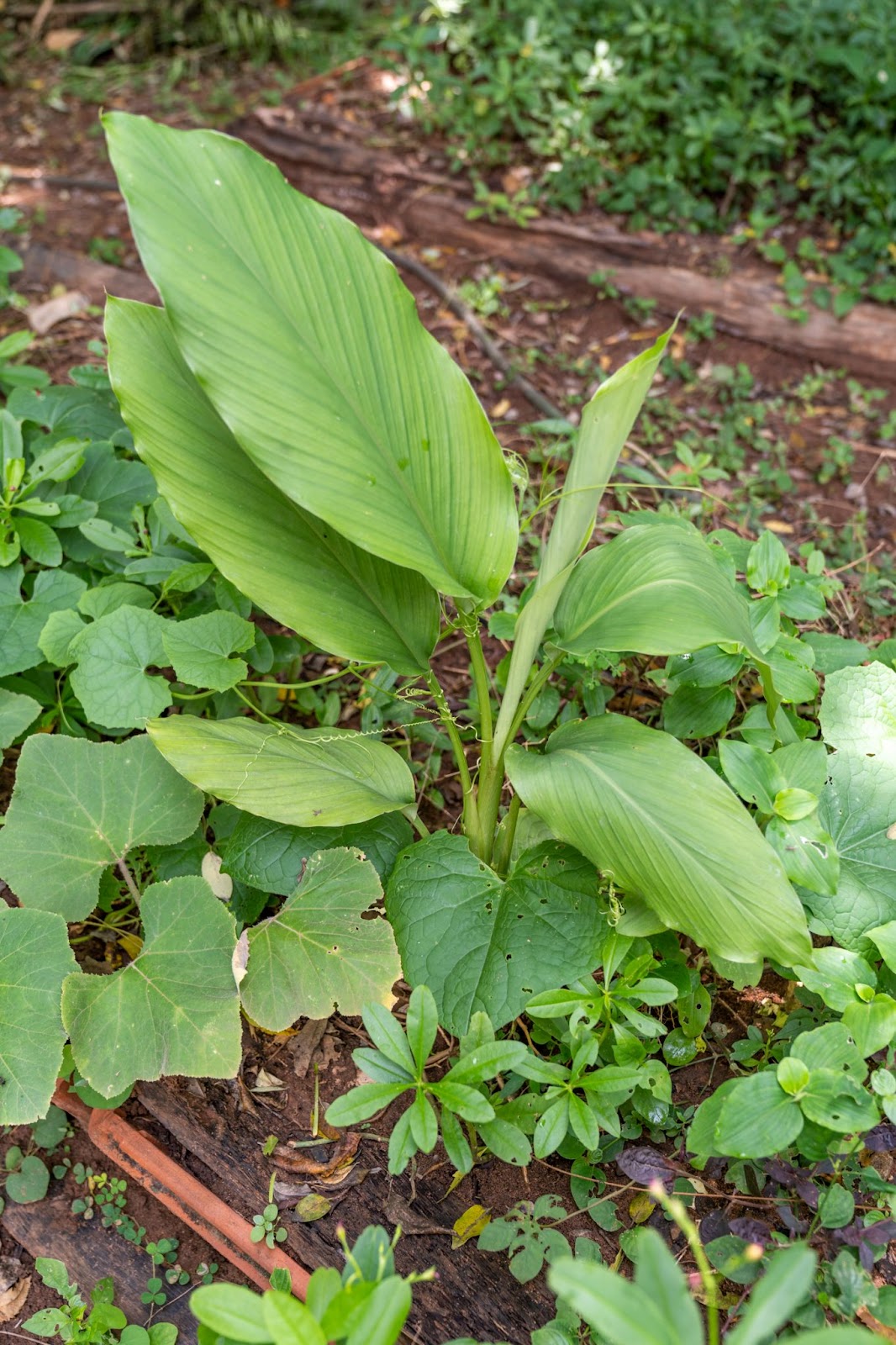
By understanding the needs of these plants in terms of light and shade, we can collaborate with nature to create an intense food forest. In Solitude, this has taken time to emerge. Still, now thipili is abundant, and turmeric and pineapples are a staple between most crops, feeding from the water given to other crops. We can’t understand the soil ecology and how these plants affect one another. All I can say is that Solitude has such beauty due to the diversity and harvests that come throughout the year.
Leave a Reply