Category: 365 Days
-
Plantain Porriyal
High in iron and vitamin C. The vitamin C facilitates the absorption of iron. Vitamin C is called as absorbic acid. It is a perfect vegetable for kids to eat. It can also be seved with a drizzle of soy sauce, to add nice touch. Try this easy and simple recipe, a perfect meal addition!…
-
The Last Custodians of Cultural and Nutritional Identity- 8
In my early years in Auroville, when I started farming, I had a very successful tapioca crop. My village neighbors would come and buy the tapioca for Rs. 2.50 per kilo. I started to understand how valuable tapioca was for them as a local food. They would eat it raw, make chips, make flour, and…
-
The Last Custodians of Cultural and Nutritional Identity- 7
Slow food has become a very popular movement in the West; in local villages throughout India, women would wake up at the crack of dawn, draw water from a well, sweep their doorsteps, and pound millets into flour. In Tamil Nadu, as in many other states, ragi or finger millet was a staple food, and…
-
The Last Custodians of Cultural and Nutritional Identity- 6
People often come to the cafe, asking for natural remedies for kidney stones. Village ladies have taught me many traditional remedies using local plants. For kidney stones, they recommend taking the juice of the banana stem. Traditionally, they also cook it in different ways. Illustrating the famous Tamil proverb, “உணவே மருந்து- Food is medicine.”
-
The Last Custodians of Cultural and Nutritional Identity- 5
People have forgotten the value of local weeds that grow around them. The traditional village ladies did not have that luxury. They were most often paid for their labour with grains. And edible weeds were highly valued as an addition to the meal. Weeds were collected while grazing cows and goats. Grandmothers passed their knowledge…
-
The Last Custodians of Cultural and Nutritional Identity- 4
The old women represent ancestral wisdom by caring for their families with healthy meals from local ingredients. Their culinary prowess not only sustains but also revitalizes cultural identity. Through cherished recipes, they bridge generations, infusing each dish with the essence of tradition. One such gem is the use of drumstick spinach, celebrated for its health…
-
The Last Custodians of Cultural and Nutritional Identity- 3
Old people in the village tell me that 50 years ago, there was no money. Mothers had to feed their families. There were no Maggie noodles you could buy at the village shops, so what did they eat? “Local foods”. Women had a treasure trove of knowledge with which they feed their families. One of…
-
The Last Custodians of Cultural and Nutritional Identity- 2
If you ask any old lady in the village, “What vegetables did you eat as a child?” She won’t talk about potatoes or carrots, broccoli or cauliflower; she’ll talk about vegetables like plantain, cooking banana. Available all year round, she knows how to cook it in different ways and how to satisfy her children’s hunger.…
-
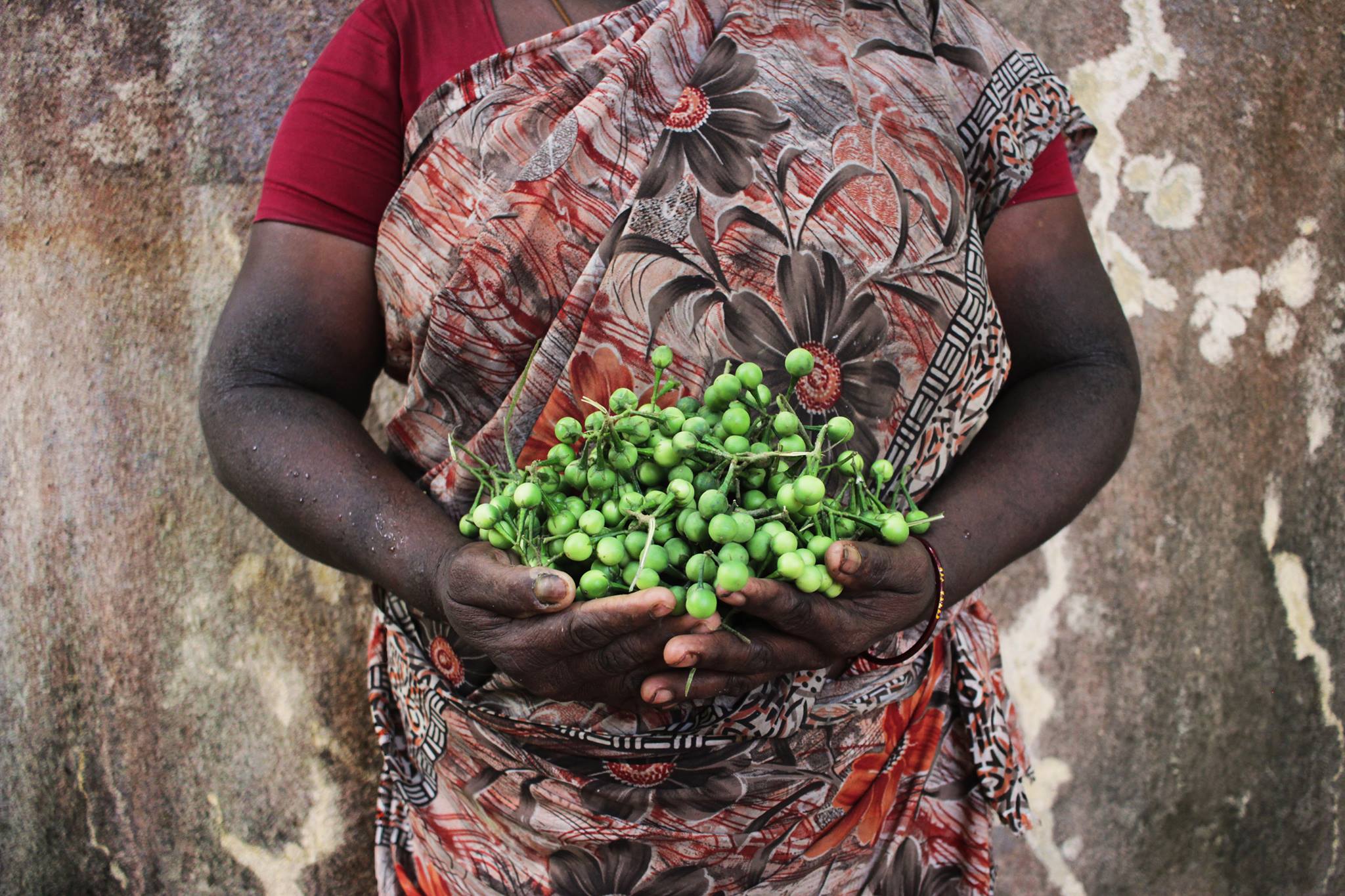
The Last Custodians of Cultural and Nutritional Identity- 1
Local ladies, Mothers, grandmothers, and farmers are the last custodians of our culture. They are the ones who still recognize the local weeds and know how to use them when to consume them, their benefits, and their diverse values. Women are the backbone of this country, and this series of photos by photographer Catherine Leo…
-
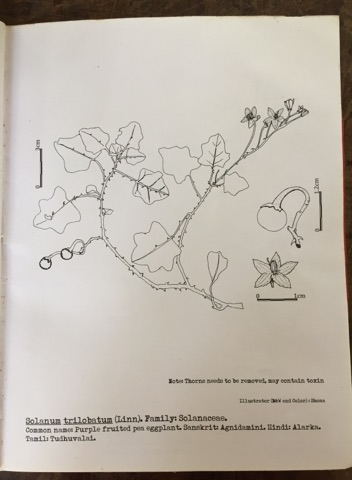
Thuthuvalai
Nina Sengupta’s book “Edible Weeds and Naturally Growing Plants in Auroville” is an amazing resource for people learning about edible weeds. The book boasts beautiful line drawings illustrating the physiology of the plants as well as information on their medicinal and nutritional properties. It also has a color inlay that has color pictures of the…